
Bitumen 80/100
Bitumen Penetration Grade 80/100 is a standard penetration grade Bitumen usually used as a Paving Grade. Bitumen suitable for road construction and to produce asphalt pavements with superior properties. This grade of Bitumen is mainly used in the manufacture of hot mix asphalt for bases and wearing courses. The main common usage of this product is in road making in cold regions. Bitumen 85/100 is suitable for road construction and for the asphalt pavements with superior properties. This type of bitumen used in the manufacture of hot mix asphalt for bases and wearing courses and the main usage of this product is used in the spaying and chip application. Due to its relatively low air blowing and penetration, It is used in areas with cold weather for asphalting and insulation. It is not cracked in low temperatures.
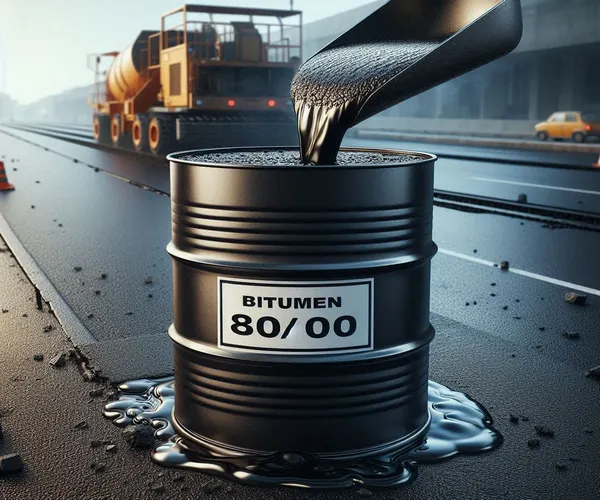
Bitumen Penetration Grade 80/100 is a standard penetration grade Bitumen usually used as a Paving Grade. Bitumen is suitable for road construction and for producing asphalt pavements with superior properties. This grade of bitumen is mainly used in the manufacture of hot mix asphalt for bases and coating courses. The main common usage of this product is in road making in cold regions. Bitumen 85/100 is suitable for road construction and for asphalt pavements with superior properties. This type of bitumen is used in the manufacture of hot mix asphalt for bases and wearing courses and the main usage of this product is used in the spaying and chip applications. Due to its relatively low air blowing and penetration, it is used in areas with cold weather for asphalting and insulation. It is not cracked in low temperatures. The penetration grade bitumen has a thermoplastic property which causes the material to soften at high temperatures and to harden at lower temperatures. This unique temperature/viscosity relationship is important when determining the performance parameters such as the adhesion, rheology, durability, and application temperatures of bitumen.
80/100 bitumen is a type of penetration bitumen with a penetration range between 80 and 100 tenths of a millimeter. This level of penetration indicates the relative softness of the bitumen, making it suitable for use in colder climates. Generally, the lower the penetration grade of the bitumen, the harder it is, and it is more suitable for warmer regions, while bitumen with higher penetration grades is recommended for colder regions.
80/100 bitumen is mainly used in road construction and asphalt production in cold climate regions. Due to its greater softness, it shows better flexibility at lower temperatures and prevents asphalt cracking.
The numbers 80/100 represent the penetration level of bitumen. This value indicates that, under laboratory conditions, a standard needle penetrates 80 to 100 tenths of a millimeter into the bitumen.
- A higher number → Softer bitumen (for colder regions)
- A lower number → Harder bitumen (for warmer regions)
80/100 bitumen is produced from the distillation of crude oil using one of the following methods:
- Air Blowing: Blowing hot air into the residue of the distillation tower.
- Straight Run: Direct distillation of crude oil without additional processes.
To assess the quality of this bitumen, the following tests are conducted:
- Penetration Test: Measuring the penetration depth of the needle at 25°C.
- Softening Point Test: Determining the temperature at which the bitumen softens.
- Loss on Heating Test: Measuring the evaporation of volatile compounds.
- Solubility Test: Determining the purity of the bitumen.
Advantages:
- High flexibility at low temperatures.
- Resistance to cracking in cold weather.
- Good adhesion to aggregate materials.
Disadvantages:
- Insufficient resistance to deformation at high temperatures.
- Not suitable for tropical regions.